
Introduction to the P/B Ratio in Investing
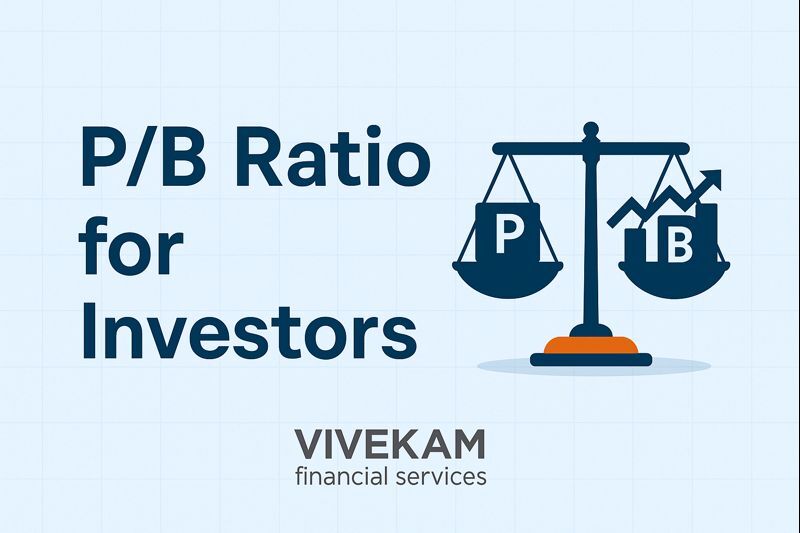
P/B Ratio for Investors: How to Evaluate Company Value Accurately is more than just a valuation lesson—it’s a survival skill in the stock market. Many investors chase earnings, stories, and trends, but quietly ignore what a company already owns. That’s exactly where the PB ratio becomes powerful.
The PB ratio in share market analysis helps investors answer a critical question:
 Am I paying too much for the company’s actual net worth?
When markets turn volatile, earnings fluctuate, but balance sheets remain the anchor. This is why seasoned value investors rely on the PB ratio to avoid overpriced traps and identify genuine bargains.
What Is PB Ratio?
Meaning of PB Ratio in Simple Terms
So, what is the PB ratio?
It measures how the market values a company compared to its book value (net assets).
In plain language:
- PB ratio of 1 means the stock trades at its net worth
- PB ratio below 1 suggests undervaluation
- PB ratio above 1 signals optimism, profitability, or strong future expectations
Unlike hype-driven metrics, the PB ratio is grounded in reality.
PB Ratio in Share Market Explained
The PB ratio in share market is especially relevant for:
- Banks
- NBFCs
- Manufacturing firms
- Asset-heavy companies
In these sectors, assets matter more than projections, making PB ratio far more reliable than earnings-based ratios alone.
PB Ratio Formula and Calculation
PB Ratio Formula
The PB ratio formula is straightforward:
PB Ratio = Market Price per Share ÷ Book Value per Share
This simplicity is its strength.
How to Calculate PB Ratio Step by Step
If you’re wondering how to calculate PB ratio, follow this process:
- Check total assets and liabilities from the balance sheet
- Subtract liabilities from assets
- Divide by total outstanding shares
- Divide current share price by book value per share
This method helps investors cut through noise and focus on intrinsic value.
Why Use the P/B Ratio?
Importance of P/B Ratio for Value Investors
Why use the P/B ratio?
Because it emphasizes what the company owns today, not what it promises tomorrow.
Key reasons investors rely on it:
- Provides margin of safety
- Helps detect undervaluation
- Protects against overhyped stocks
For conservative and long-term investors, PB ratio is a defensive weapon.
When PB Ratio Works Best
PB ratio works best when:
- Earnings are volatile
- Markets are bearish
- Businesses are asset-backed
This is why legendary value investors favor it during downturns.
What Is a Good PB Ratio?
Industry-Wise Interpretation
What is a good PB ratio?
There’s no single answer—it depends on the industry.
- Banks: 0.8 – 2
- Manufacturing: 1 – 3
- Capital-light tech firms: Often higher
Context matters more than the number itself.
High vs Low PB Ratio Meaning
- Low PB ratio → Potential undervaluation or business weakness
- High PB ratio → Strong returns on equity or brand dominance
Blindly chasing either is a mistake.
Low PB Ratio Stocks: Opportunity or Trap?
Advantages of Low PB Ratio Stocks
Low PB ratio stocks appeal to value investors because they:
- Offer downside protection
- Indicate pessimism already priced in
- Can outperform during recovery phases
These stocks reward patience.
Risks Involved
But beware—low PB ratios can also indicate:
- Poor asset quality
- Structural business decline
- Weak management decisions
This is where deeper analysis separates investors from gamblers.
PE Ratio vs PB Ratio
Key Differences Between PE and PB Ratio
The PE ratio vs PB ratio debate is common, but unnecessary.
PE Ratio | PB Ratio |
Focuses on earnings | Focuses on assets |
Sensitive to cycles | More stable |
Best for growth stocks | Best for value stocks |
Each tells a different story.
Which Ratio Should Investors Prefer?
Smart investors don’t choose—they combine both.
PE explains performance. PB explains protection.
Limitations of the Price-to-Book Ratio
Accounting and Asset Valuation Issues
The Limitations of the Price-to-Book Ratio include:
- Outdated asset values
- Ignoring intangibles like brands
- Accounting manipulation risks
Numbers are only as honest as the books behind them.
Why PB Ratio Alone Is Not Enough
PB ratio ignores:
- Growth potential
- Competitive advantage
- Management quality
That’s why it’s a filter—not a final decision tool.
Practical Examples of PB Ratio Analysis
If two banks operate in the same market and one trades at a PB ratio of 0.9 while the other trades at 1.6, the cheaper one demands investigation, not blind buying.
For deeper ratio comparisons, platforms like Investopedia provide reliable valuation explanations:
https://www.investopedia.com
FAQs on PB Ratio
1. What is the PB ratio in simple words?
It shows how much investors are paying for a company’s net assets.
2. What is a good PB ratio for beginners?
Between 1 and 2, depending on the industry.
3. Are low PB ratio stocks always safe?
No. Some are cheap for valid reasons.
4. How to calculate PB ratio quickly?
Divide stock price by book value per share.
5. PE ratio vs PB ratio—which is better?
Neither alone. Use both together.
6. Why use the P/B ratio for banks?
Because balance-sheet strength defines banking businesses.
Conclusion: Using PB Ratio Wisely
P/B Ratio for Investors: How to Evaluate Company Value Accurately is not about finding cheap stocks—it’s about avoiding expensive mistakes. When combined with profitability, governance, and industry context, the PB ratio becomes one of the most reliable valuation tools available.
Investors who respect balance sheets survive longer. Those who ignore them usually learn the hard way.