Let’s be honest—most people don’t have the luxury of staring at stock charts between 9:15 AM and 3:30 PM. Jobs, meetings, life—things get in the way. That’s exactly where After Market Orders (AMOs) step in.
This guide breaks down After Market Orders without jargon overload or boring definitions. If you’ve ever searched what is after market order, how does after market order work, or how to place order after market hours, you’re in the right place.
Introduction to After Market Orders
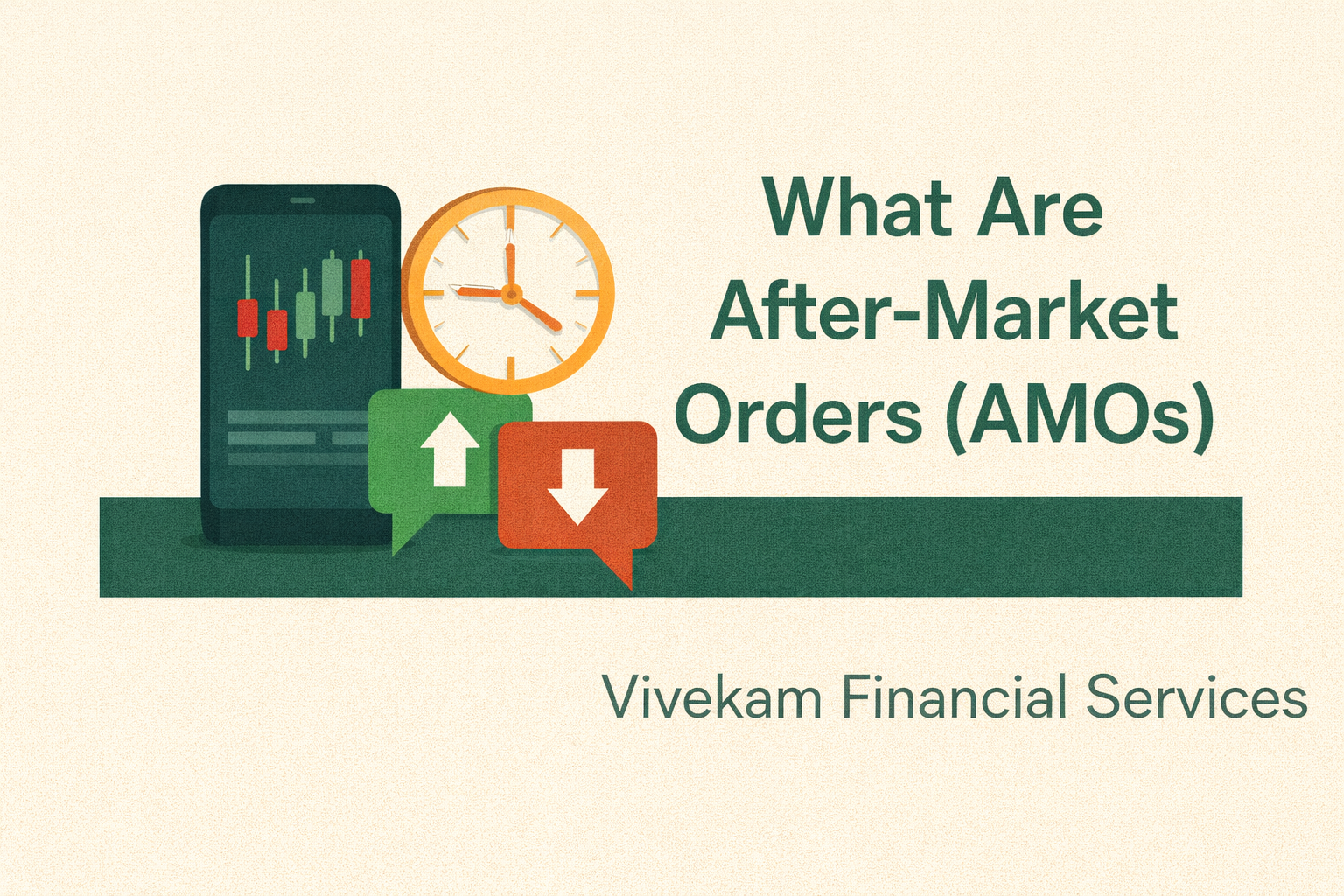
After Market Orders, commonly called AMOs, allow investors to place buy or sell orders after the market has closed. These orders don’t execute instantly—they wait patiently until the next trading session begins.
In short, AMOs let you plan trades calmly, without the chaos of live markets, price flickers, or emotional decision-making. For modern investors—especially working professionals—this feature isn’t a luxury anymore. It’s a necessity.
What Are After-Market Orders (AMOs)?
An After Market Order is an instruction you give your broker to buy or sell a stock outside regular trading hours. The order sits in a queue and is sent to the exchange when the market opens the next day.
In India, AMOs are supported on major exchanges like the National Stock Exchange (NSE) and BSE.
Key Definition
An After Market Order is a trade placed after market hours that is executed in the next trading session, subject to price and market conditions.
Simple. No drama.
What Is After Market Order Timing in India?
Timing matters—especially with AMOs.
While exact windows differ slightly by broker, the general structure remains consistent:
|
Session |
Time |
|
AMO Placement Window |
3:30 PM – 9:00 AM |
|
Order Execution |
After market opens (9:15 AM) |
|
Applicable Exchanges |
NSE & BSE |
Orders placed during this window remain inactive but queued until the market opens.
How Does After Market Order Work?
Let’s walk through how after market order works without overcomplicating it.
Step-by-Step Working of AMO
- Market Closes – Regular trading ends at 3:30 PM.
- You Place an AMO – Using your trading app or platform.
- Broker Queues the Order – Nothing is executed yet.
- Market Opens – At 9:15 AM, your order is sent to the exchange.
- Execution Depends on Reality – Price, volume, and volatility decide your fate.
 Important reality check:
AMOs are not guaranteed to execute. The market doesn’t owe you anything.
How to Place Order After Market Hours
If you can place a normal trade, you can place an AMO. No extra degree required.
How to Place Order After Market Hours (Step-by-Step)
- Log in to your trading app
- Search for the stock
- Click Buy or Sell
- Select After Market Order (AMO)
- Choose order type (Limit or Market)
- Enter price and quantity
- Confirm and relax
Most Indian brokers—Zerodha, Groww, Upstox, Angel One—support AMOs by default.
Types of After-Market Orders
Knowing the types of After Market Orders can save you from unnecessary losses.
1. AMO Limit Order
- Executes only at your chosen price
- Best option for volatile markets
- Most recommended
2. AMO Market Order
- Executes at whatever price is available at open
- Can surprise you (not always pleasantly)
3. AMO Stop-Loss Order
- Designed to control downside risk
- Useful, but timing matters
4. AMO Delivery Order
- Intended for long-term investing
- Shares go directly to your demat account
Benefits of an After-Market Order (AMO)
AMOs aren’t popular by accident.
Top Benefits of an After-Market Order
 Place orders without watching charts all day
Plan trades without emotional pressure
Ideal for working professionals
React to overnight global news
Avoid impulsive market-hour decisions
Better control using limit prices
Efficient portfolio planning
In short, AMOs give you control, not adrenaline.
Regular Market Orders vs After Market Orders
Here’s a clean comparison—no fluff.
|
Feature |
Regular Market Order |
After Market Order |
|
Timing |
Market hours |
After market hours |
|
Execution |
Immediate |
Next trading day |
|
Price Control |
Limited |
Higher (limit orders) |
|
Volatility Risk |
Lower |
Slightly higher |
|
Flexibility |
Low |
High |
Neither is “better.” They just serve different purposes.
How to Check After-Market Orders on NSE?
Wondering how to check After-Market Orders on NSE? It’s easier than you think.
Steps to Check AMO Status
- Log in to your trading account
- Open Order Book
- Filter AMO / Pending Orders
- Check status: Pending, Executed, Cancelled, or Rejected
If rejected, your broker will usually tell you why.
Common Reasons AMOs Get Rejected
AMO rejections aren’t personal. Common reasons include:
- Circuit limit breaches
- Insufficient funds or margin
- Invalid price range
- Stock blocked for AMO trading
- Excessive volatility at market open
Most of these are avoidable with better planning.
Are After Market Orders Safe?
Yes—After Market Orders are safe, but not risk-free.
The biggest risk comes from opening price gaps. That’s why experienced traders prefer limited AMOs over market AMOs.
Control first. Speed second.
Who Should Use After Market Orders?
AMOs are especially useful for:
- Working professionals
- Long-term investors
- Swing traders
- Investors reacting to global news
- Anyone who hates market-hour stress
If that sounds like you, AMOs make sense.
Best Strategies for Using After Market Orders
Smart AMO usage isn’t complicated:
 Prefer limit orders
Avoid highly volatile stocks
Track global market cues
Watch corporate announcements
Maintain sufficient margin
AMOs reward discipline—not impatience.
FAQs – After Market Orders (AMOs)
1. What is after market order in simple terms?
It’s an order placed after market hours that executes when the market opens next day.
2. How does after market order work?
The broker queues it and sends it to the exchange at market opening.
3. Can AMOs be cancelled?
Yes, anytime before the market opens.
4. Are AMOs executed at opening price?
Market AMOs are; limit AMOs execute only if your price matches.
5. Is AMO available for intraday trading?
Depends on broker policy.
6. Are there extra charges for AMOs?
No—charges are usually the same as regular orders.
Conclusion: Should You Use After Market Orders?
After Market Orders aren’t magic—but they’re powerful when used correctly.
They give you time to think, plan, and execute trades without panic. If you combine AMOs with proper research and limit pricing, they can significantly improve both your discipline and results.
Calm decisions beat rushed ones. Every single time.